
It not only wants the ministry of petroleum and natural gas to rework the under-recovery figure for the current year but has also decided to look at the issue of oil subsidies only in February 2010, when the next Budget will be announced.

Litigation, regulations and the process of seeking approvals have also discouraged some developers.

They want more cash, forex, higher bond coupons and increase in market prices for petrol, diesel, LPG.

Reliance Brands, a group company of Reliance Industries, began operations two years earlier to launch premium-to-luxury domestic and international brands and also set up retail stores for them.

After the euphoria, "affordable" realty developers are faced with the reality of excesses.
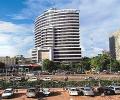
Because of oversupply and rising vacancy levels in cities such as Delhi, Mumbai, Bangalore, among others, rentals are expected to remain stagnant in the next six months or see a further fall of 10-15 per cent.

Financial losses at nearby units in crores, air quality severely affected

A government that limits its role to regulation would be a great enabler for agricultural growth.

The growing margins suggest that the belt tightening is paying off. For example, the margins of Pantaloon Retail, the country's largest listed retailer, have gone up from 9.2 per cent in June last year to 10.6 per cent in June 2009.Others such as the Raheja-owned Shoppers Stop and Tata Group's Trent, Reliance Retail and Spencer's Retail aren't far behind.

Reliance Industries Ltd has decided not to use its allocation of gas from the Krishna-Godavari basin's D6 field for petrochemical production; it will, instead, swap it with gas available from other sources. It will use D6 gas only for power generation.

Sales grew only 5-10% last year on weak consumer sentiments

The government may consider a public-private partnership (PPP) mode for setting up national gas highways to ensure distribution across the country.

After a year of slow growth, apparel maker and retailer Provogue is reworking its business strategy to boost revenues and prop up margins, a top company executive said.
Putting an end to the fierce scramble for India's iron ore resources, the government has decided to split the Chiria iron ore mines in Jharkhand into two and give at least half the reserves to Steel Authority of India Ltd for its expansion plans. The other half will be kept for development by the private sector later, said informed sources.

Q3 will be better than the second, say bankers and builders.

Last week, banks were asked to factor in the loans extended to a group -- comprising subsidiaries, special purpose vehicles and related parties of a real estate company -- 'as a matter of prudence'.

The department had earlier also examined the option of a direct equity sale but opted for a PPP model because it offered revenue sharing opportunities, fertiliser secretary Atul Chaturvedi said. Chaturvedi explained that whereas the outright sale of equity will mean the government will have to wait for the plants to make profits to get a share of revenue, the PPP mode will help it do so in the first year.
Government-owned Steel Authority of India Ltd, the country's largest steel producer, is looking to set up two greenfield slag-based cement manufacturing units with a total capacity of 3 million tonnes through a joint venture.
Government-owned Oil and Natural Gas Corporation, the country's largest petro exploration company, wants to hire an ultra deep-sea drill rig, the daily cost of which is about Rs 5 crore.

With production hitting a three-year low of 14.7 million tonnes in this sugar season (October to September), the government is also expected to double the levy quota for the PDS from 10 to 20 per cent to tide over shortages. The levy price and quota act as a notional benchmark for open market sugar prices, which have doubled to Rs 34 to Rs 35 a kg since last September, owing to a global shortage. The price of levy sugar is half that of the open market price.
 © 2026 Rediff.com - Advertise with us - Disclaimer - Privacy Policy - Sitemap - Feedback - About us - Terms of use - Grievances